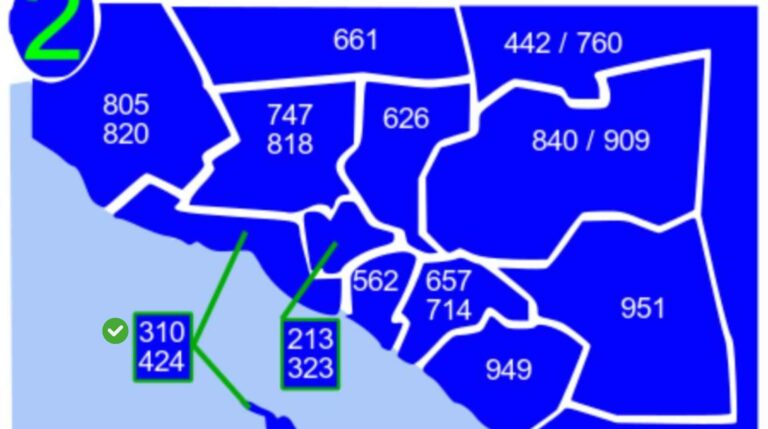
The 310 area code covers key parts of Los Angeles County in California. It serves about 2.5 million people across urban and coastal zones. This code overlays with 424, meaning both share the same region. Established in 1991, it split from 213 to handle growth in West Los Angeles.
Major cities include Santa Monica, Beverly Hills, Torrance, and Inglewood. It touches small parts of Ventura County, like Malibu. Santa Catalina Island falls under 310 too. In 2025, no new splits are planned, but number exhaustion pushes demand for vanity options.
Scams plague 310 numbers, with spoofing up 50% this year. Robocalls hit 3.7 billion nationwide in October 2025 alone. Getting a local 310 number starts at $2.99 per month through apps like SlyNumber. Time zone is Pacific, requiring 10-digit dialing for all local calls.
Introduction: Why 310 Matters in LA’s Westside and South Bay
310 stands out as a premium code in Los Angeles. It links to affluent spots like the Westside and South Bay. Over 88% of its coverage sits in Los Angeles County.
This code serves 3.5 million residents in a mix of beach towns and urban hubs. Overlay with 424 began in 2006 to ease shortages. Now, in 2025, it faces high demand from businesses and locals.
Common issues include scam calls and dialing mix-ups. This guide tackles those head-on. You’ll get maps, stats, and steps to secure your own number.
Exact Coverage: Cities, Neighborhoods, and Boundaries
310 blankets West Los Angeles neighborhoods like Bel Air, Brentwood, and Westwood. It extends to Venice, Pacific Palisades, and Marina del Rey.
South Bay cities include Torrance, Redondo Beach, and Manhattan Beach. Add Hermosa Beach, El Segundo, and Hawthorne to the list. Further inland, it covers Gardena, Carson, Compton, and Inglewood.
Gateway areas like Rancho Palos Verdes and Palos Verdes Estates are included. Avalon on Santa Catalina Island uses 310. Small Ventura County sections, such as Malibu and Topanga, round it out.
Check ZIP codes from 90045 to 90293 for boundaries. This avoids confusion with nearby codes like 323 or 562. For precision, use online tools from AllAreaCodes.
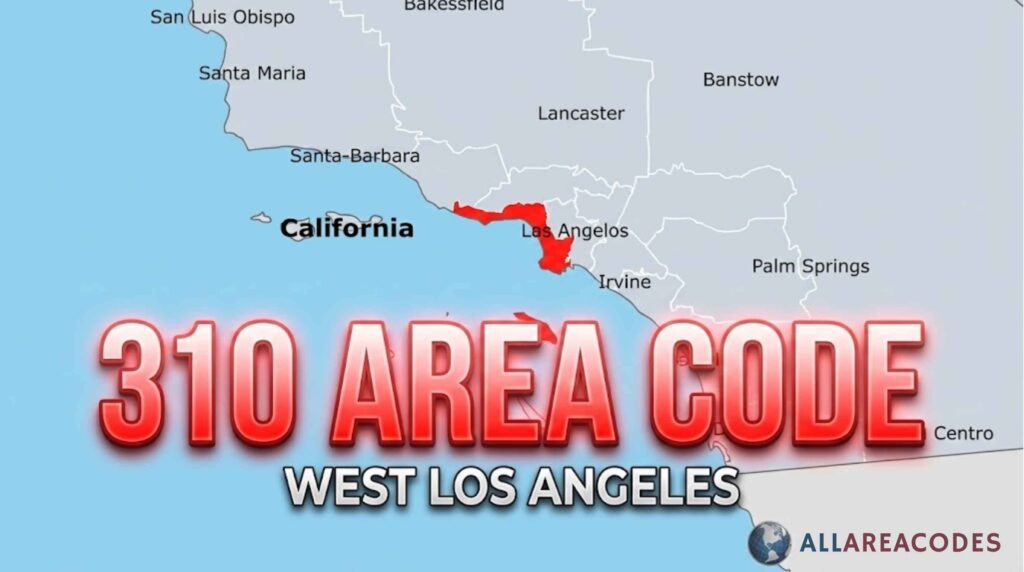
That map clarifies the layout. Now, let’s trace how 310 evolved over time.
History: From 1991 Split to Modern Overlay Challenges
310 split from 213 on November 2, 1991. This addressed phone demand in West and South LA.
In 1997, another split created 562 for southeast areas like Long Beach. This kept 310 focused on coastal zones.
By 2006, overlay 424 joined to prevent exhaustion. Protests delayed it due to 10-digit dialing costs. It was California’s first overlay under new rules.
In 2025, the FCC watches for shortages. No splits loom, but vanity numbers sell fast. This history shapes today’s use—know it to avoid old dialing habits.
Understanding the past helps with current rules. Next, dial right to skip fees.
Time Zone and Dialing Rules: Avoid Costly Mistakes
310 follows Pacific Time, UTC-8 in winter and UTC-7 in summer. It matches LA’s schedule for film and tech work.
Always use 10 digits for local calls within 310 or 424. Skip the “1” prefix unless calling outside.
For international, add +1-310. Carriers like Verizon offer free forwarding for travelers. Set app reminders for time differences—NYC is three hours ahead.
These rules prevent errors. But why chase a 310? Its status explains.
The Prestige Factor: Why 310 Boosts Your LA Cred
310 signals Westside prestige. It’s tied to Hollywood, Beverly Hills, and Malibu elites.
Compared to 818’s Valley vibe, 310 gets 25% higher local pick-up rates. Businesses in Venice tech or Torrance ports benefit.
It’s featured in films like La La Land. Use it for networking at Santa Monica events. This edge draws users—now, how to grab one.
Step-by-Step: How to Get a 310 Number in 2025
Start with providers like Dialpad or NumberBarn. Sign up online for $5–$15 monthly.
For locals, port your number via AT&T or T-Mobile apps. Verify with ID.
Businesses: Use Dialpad’s trial. Select 310, add EIN, get unlimited calls.
Vanity hunt: Target prefixes like 310-555 on FCC sites. If scarce, pick 424—same area, less wait.
Apps like Burner offer trials for quick setup. No hardware needed. This solves availability issues fast.
With your number set, watch for fakes. Scams lurk in 310.
Spam Alert: Spot and Block 310 Scams
310 ranks among top scam codes in 2025. Spoofing rose 50%, often for IRS or loan fraud.
Patterns: Silent calls or “hello” texts from Compton prefixes. 80% of 310-800/900 series flagged.
Red flags: Late-night “local” pitches. Spoofed via VoIP from afar.
Block on iPhone: Go to Recents, tap Info, select Block. Enable T-Mobile’s Scam Shield for $4 monthly.
Report to FTC at donotcall.gov. Forward to 7726 for carrier blocks—cuts calls by 80%. Nomorobo app filters for $2 monthly.
Stay vigilant. Now, peek at who lives here.
Demographics and Trends: Inside 310’s Diverse Pulse
Median age is 36.2 years. Under 5: 5.6% average; 10–14: 6.3% male, 6.1% female.
Westside: 60%+ White/Asian. South Bay: 40% Latino. Median income hits $98,455—above national averages.
Tech booms in Silicon Beach. Ports drive logistics in Torrance. Post-2023, remote workers rose 15%.
EV stations grow in Redondo. Population holds at 2.5 million, with LA projecting 3.9 million citywide by 2025. These shifts influence number use.
For more, see Area codes 310 and 424 on Wikipedia.
FAQs: Instant Answers to 310 area code Queries
Is 310 only for LA? No—it includes Catalina and Ventura bits; 88% LA County.
424 vs. 310: Same area; 310 has legacy appeal.
Cost from NYC? Free domestic; $0.02–$0.05/min international without plans.
Scam-prone prefixes? 310-800/900—80% flagged in 2024 FCC data.
This wraps the guide. Use these tips to navigate 310 smoothly.