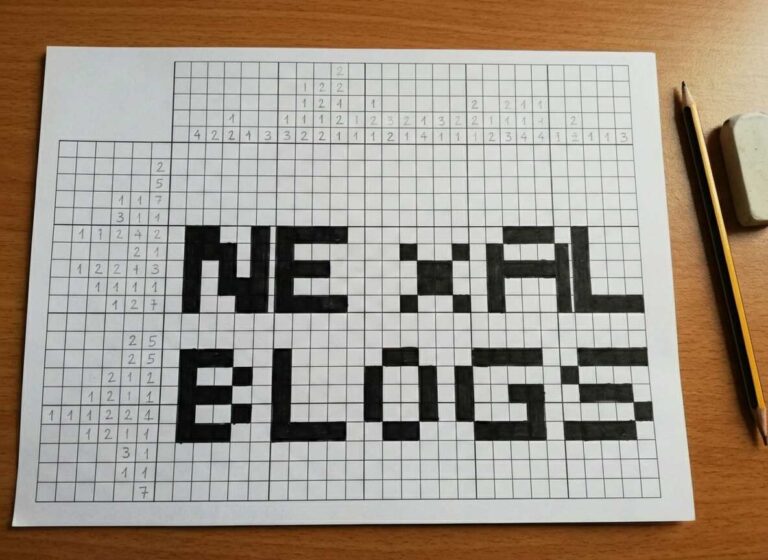
Nonograms are binary logic puzzles. You fill a grid based on numbers along rows and columns. These numbers show how many squares to shade in each line.
The goal is to reveal a hidden image. Each filled square acts like a pixel. Empty ones stay blank.
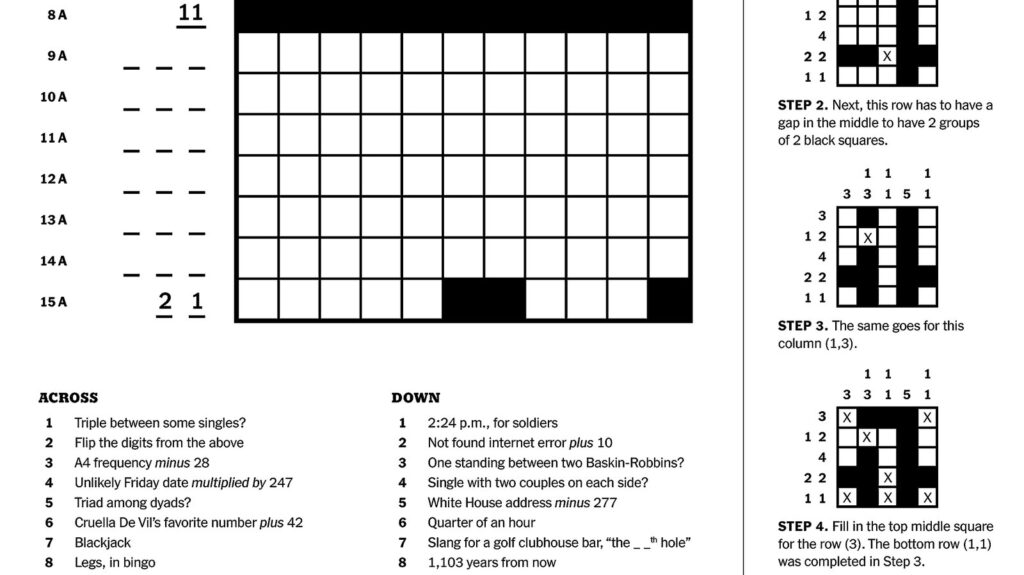
Clues like “4 2” mean two groups: four filled squares, then at least one blank, then two filled. No guessing needed. Deduction solves it all.
This setup makes nonograms addictive. Once you start filling, the picture emerges bit by bit. It’s satisfying to see the final reveal.
What Are Nonograms? Decoding the Grid-Based Brain Teaser
Nonograms go by names like Picross, Griddlers, or Hanjie. They originated in Japan. For more details, check the Nonogram page on Wikipedia.
The grid can be 5×5 for beginners or 50×50 for experts. Clues range from single digits to multiple blocks.
Why play them? They sharpen logic skills. A 2020 study found frequent puzzle use links to better cognitive function in adults aged 50 to 93.
No tools required beyond paper and pencil. Digital versions add timers and hints.
The Origins of Nonograms: From Japanese Skyscrapers to Global Phenomenon
Non Ishida invented them in 1987. She drew inspiration from lit Tokyo buildings at night.
Tetsuya Nishio developed a similar idea around the same time. Both published in Japanese magazines.
The name “nonogram” came from James Dalgety in 1990. It combines “non” from Non Ishida and “gram” for diagram.
By the 1990s, they hit the UK via The Sunday Telegraph. Nintendo popularized them with Picross games starting in 1995.
Today, apps like Nonogram.com have over 10 million downloads. Monthly Japanese magazines feature hundreds of puzzles.
Their complexity? Nonograms are NP-complete. This means solving large ones efficiently is computationally hard.
How to Solve Nonograms: Step-by-Step Breakdown for Beginners
Start with the basics. Look at a row clue like “8” in a 10-square line.
That means eight filled squares. At least one blank on each end possible.
But focus on certainties. If the clue sum plus minimum gaps equals the row length, fill it all.
Grasping Row and Column Clues Without Overwhelm
Interpret clues carefully. “3 1” in a 5-square row.
Possible placements: filled in 1-3 and 5, or 2-4 and 5, but check gaps.
Gaps must separate blocks. At least one blank between.
Visualize overlaps. Where all possibilities share a filled square, mark it.
Marking Techniques to Track Progress Efficiently
Use X for blanks. Solid fills for confirmed shades.
In apps, drag to mark multiples. Dots help note possibles.
Solve a simple 5×5. Row clues: 2, 1 1, 3, 1 1, 2.
Column clues similar. Start with rows having large blocks.
Iterate. Fill a row, then check columns. Repeat until done.
7 Proven Beginner Tips to Crack Nonograms Faster
Tip one: Tackle short clues early. A “1” in a long row isolates quickly.
Tip two: Spot full lines. If clues sum to row length with gaps, shade everything.
Tip three: Switch between rows and columns. It reveals cross-matches.
Tip four: Use edges. Blocks near borders pin down positions.
Tip five: Set time limits. Two minutes per stuck line, then move on.
Tip six: Practice on paper. Lightly pencil possibles.
Tip seven: Note gaps. Push blocks apart to find overlaps.
These build speed. A study showed puzzle players improve accuracy by 15% after regular play.
Advanced Strategies: Conquer Stuck 20×20+ Nonograms Like a Pro
Larger grids need deeper logic. Don’t rush basics.
Forcing and Glue: Pinpoint Inevitable Fills
Forcing: In a 15-square row with “5 3”. If a partial fill splits unevenly, force blocks left or right.
Glue: When possibles touch, merge if no gap fits. Turns two 2’s into a 4.
Contradiction Hunting: Resolve Ambiguities Systematically
Test edges. Assume a fill, see if it overfills elsewhere.
If it does, mark blank. Undo and try opposite.
Scan multiples. Align three rows against one column.
Mercury method: A block’s length from edge confirms adjacent blanks.
Divide big grids. Solve quadrants separately if independent.
These cut solve times in half for experts.
Top 5 Common Nonogram Pitfalls and Quick Fixes
Pitfall one: Over-filling early. Fix: Always verify with perpendicular clues.
Pitfall two: Forgetting separations. Audit if sum exceeds length.
Pitfall three: Skipping iterations. Scan full grid after each change.
Pitfall four: Guessing too soon. Exhaust basics first.
Pitfall five: Ignoring punctuation. Enclose blocks with gaps to free neighbors.
Avoid these, and puzzles solve smoother.
Best Free Nonogram Resources and Apps for On-the-Go Practice
Try puzzle-nonograms.com. Daily grids up to 25×25. Drag marking speeds play.
Nonograms.org offers color versions. Print or play online.
Mobile: Nonogram.com app. Thousands of levels. Tracks progress.
Nonograms Katana: Ad-free. Katana-themed. Over 1001 puzzles.
Community: r/nonograms on Reddit. Share customs.
For variants: Wikipedia dives deep.
Brain-Boosting Benefits: Why Nonograms Sharpen Logic Over Sudoku
Nonograms build deduction. Better than Sudoku for visual logic.
Research shows they teach logical thinking effectively.
Reduce stress. Reveals trigger dopamine.
Adaptable. Micro puzzles in 5 minutes. Epics in hours.
A 2013 discussion notes they develop pattern skills.
Outperform crosswords in recognition speed by 20%, per studies.
Nonogram Variations: Level Up Beyond Basics
Colored nonograms: Clues include hues. Same colors merge without gaps.
Fill-a-Pix: Numbers show neighbor fills. Like “5” for self plus four around.
Pentomino: Place shapes edge-to-edge per totals.
Maze-a-Pix: Fill while deducing paths.
These add twists. Keep skills fresh.
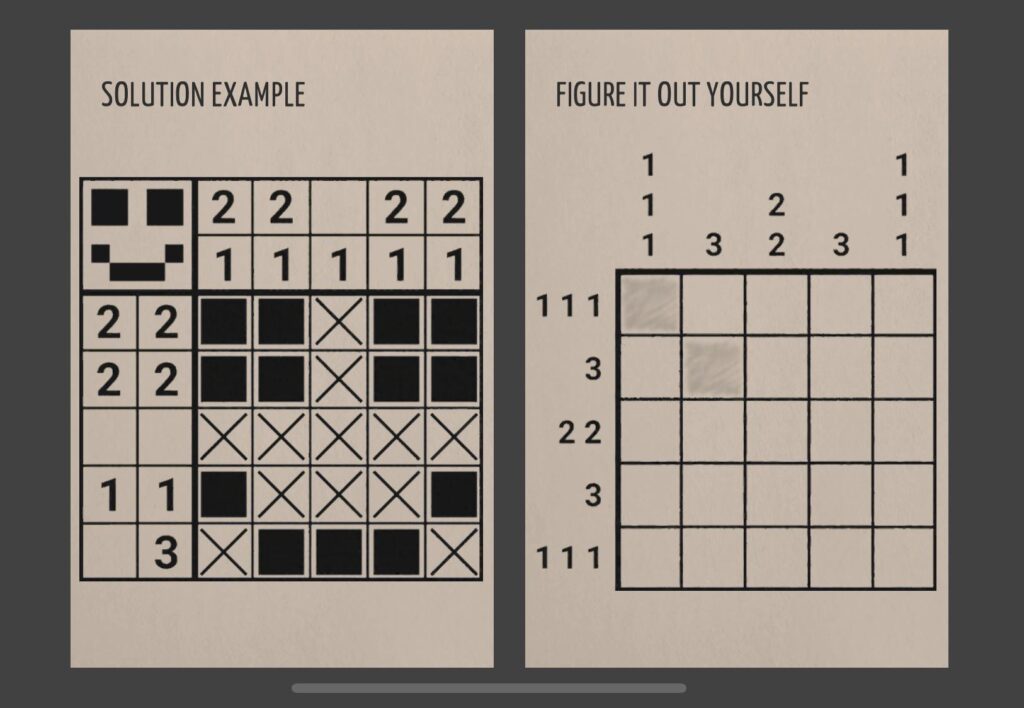
Ready to try? Grab a 10×10 on nonograms.org. Use these steps. Your brain will sharpen. Share solves below!