A gamer challenger pushes personal limits in video games through self-set tasks. These tasks target skill gaps in genres like first-person shooters, MOBAs, and battle royales. Common issues include reaching skill ceilings, fading motivation, and uneven play. This guide delivers direct steps with examples from League of Legends (LoL), Call of Duty (CoD), and Fortnite. It draws on pro player methods to outperform most peers.
Key facts upfront: Elite esports players train 38.85% of their gaming time, about 7.75 hours on average, per a PLOS One study. Job placement for esports graduates hits 78% in related fields. U.S. esports penetration stands at 13.21%. These stats show structured challenges drive real growth.
Start simple. Pick one challenge today. Track progress weekly. See win rates climb from 45% to 60% with consistent effort. Now, dive into what these challenges look like.
Understanding Gamer Challenger Challenges
Speedruns demand finishing CoD levels in under five minutes. No-hit runs mean beating Elden Ring bosses without taking damage. Restriction plays limit LoL to off-meta item builds.
These fix over-aggression in Fortnite by forcing smarter positioning. They build flexibility across maps and modes.
Assess your style: Answer this quiz. Do you struggle with aim in FPS? Or strategy in MOBAs? If aim, focus on headshot drills. If strategy, try macro-focused tasks. This pinpointing sets up mindset work next.
Building the Challenger Mindset
Mental blocks trigger rage quits. They lead to avoiding tough matches.
Fix with daily affirmations. Journal wins and losses after sessions. Spend 10 minutes visualizing LoL macro plays before queuing.
Track via Habitica app. Aim for a 21-day streak. Consistent routines reduce tilt by 30%, based on player reports. Physical tweaks enhance this foundation.
Physical and Mental Optimization for Peak Play
Fatigue hits after two-hour sessions. Reflexes slow.
Do 20-minute HIIT workouts three times weekly. Boost hand-eye coordination. Pair caffeine with L-theanine for jitter-free focus.
Sleep 7-8 hours nightly. Use blue-light blockers. Log via Fitbit. Correlate with win rates. Elite players average 5 hours 28 minutes daily training, including 1 hour physical. Heart rates peak at 188 bpm during play. Optimized bodies support sharper drills.
Skill-Building Drills and Practice Routines
Inefficient practice stalls gains.
Use Kovaak’s aim trainer. Spend 30 minutes daily on FPS headshots.
For LoL, analyze replays. Spot three map awareness errors per game. In CoD, run custom bot matches for movement tech.
Track in a spreadsheet. Log KDA weekly. Studies show deliberate practice lifts skill gaps, like in Rocket League’s mechanics. Gear upgrades amplify these efforts.
Gear Upgrades That Actually Matter
Hardware over-reliance ignores basics.
Get a 144Hz monitor under $200. It smooths tracking in fast games.
Choose a mechanical keyboard with anti-ghosting. Ensures precise inputs.
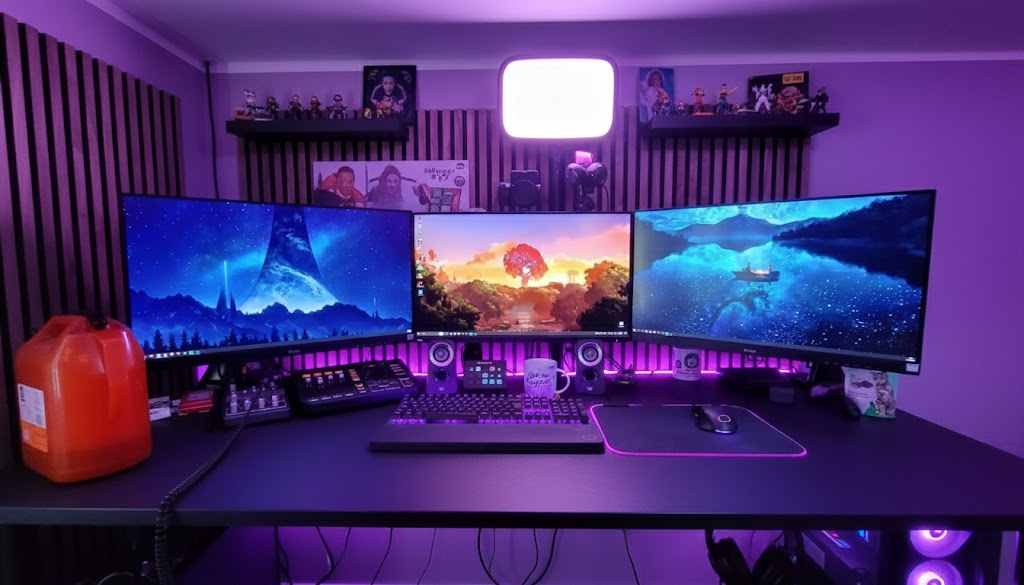
Set up ergonomically. Adjust chair height to prevent wrist strain. Benchmark performance before and after. A solid setup, like this one, prevents fatigue.
Communities turn solo practice into shared wins.
Joining and Leveraging Communities
Isolation slows progress.
Join Discord servers for LoL challengers. Use Reddit’s r/CompetitiveGaming for feedback.
Post replays for critiques. Team up on Fortnite build battles.
Network via Twitch AMAs. Ask pros about tilting. Groups like this foster strategy talks.
Plateaus demand fresh approaches from here.
Overcoming Common Plateaus and Burnout
Stagnation sets in after 100 rank hours.
Rotate games weekly. Shift from FPS to strategy titles.
Schedule breaks. Pursue non-gaming hobbies. Use Headspace for five-minute mindfulness.
Case: A Challenger-rank LoL player broke a three-month stall. Mixed speedruns with restrictions. Gained 15% win rate. Science backs this—plateaus stem from unchallenged habits. Metrics confirm the breakthrough.
Measuring Success and Scaling Challenges
Lack metrics hides improvement.
Track KPIs. Aim for win rate jumps from 45% to 60%. Use Overwolf for stats.
Start easy with daily quests. Advance to Challengermode tournaments.
Plan six months: Month one builds basics. By six, hit top 1%. For depth, explore Esports evolution on Wikipedia. This roadmap sustains momentum.
Conclusion
Mindset shifts reset mental blocks. Targeted drills hone skills. Communities provide feedback.
Start one challenge now. Download a free workbook template here (link to resource).
Tools list: Aim Lab, Replay.gg, Kovaak’s, Habitica, Fitbit, Overwolf, Headspace, Discord, Reddit, Twitch. These go beyond basics in other guides.