Introduction to Olympic National Park
Olympic National Park feels like three different worlds stitched together by raw wilderness. One moment you’re standing beneath moss-draped giants in a rainforest, the next you’re watching waves crash against a rugged Pacific coastline. Among all this natural drama stands one of the park’s most talked-about wonders: the Olympic National Park Tree of Life.
It’s not famous because it’s the tallest or oldest. It’s famous because it refuses to give up.
Where Is Olympic National Park Located?
The park is located in Washington State’s Olympic Peninsula, surrounded by water on three sides. This unique geography creates wildly different ecosystems within a single park boundary.
Why Olympic National Park Is Unique
Very few places in the world offer glaciers, beaches, and temperate rainforests all in one trip. Olympic National Park doesn’t just show nature—it flexes it.
What Is the Tree of Life in Olympic National Park?
Meaning Behind the Name “Tree of Life”
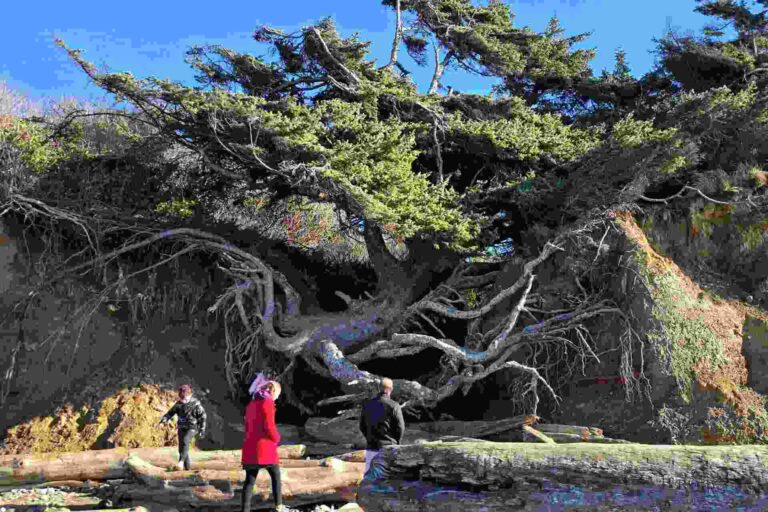
The Tree of Life gets its name from what it represents: survival against overwhelming odds. With its roots exposed and dangling in midair, the tree looks like it should have died years ago. Yet, it stands—alive and growing.
Is It a Single Tree or a Symbol?
Physically, it’s one Sitka spruce. Emotionally and symbolically, it’s a reminder that life adapts, even when conditions seem impossible.
The Legendary Tree of Life at Kalaloch
Location of the Kalaloch Tree of Life
You’ll find the Tree of Life near Kalaloch Campground, overlooking the Pacific Ocean. Coastal erosion carved away the soil beneath it, leaving the roots exposed like a sculpture.
How to Get There
The walk is short and beginner-friendly. Park near Kalaloch Campground and follow the trail toward the beach.
Best Time to Visit
Late spring through early fall is ideal. The weather is calmer, and the ground is more stable for visitors.
The Science Behind the Tree of Life
How the Tree Survives Without Visible Roots
Despite appearances, the roots still reach nutrient-rich soil hidden within the bluff. It’s like an underground lifeline—out of sight, but very much alive.
Role of Erosion and Coastal Forces
Rain, wind, and ocean spray constantly reshape the land. Ironically, the same forces threatening the tree are also what revealed its dramatic form.
Symbolism and Cultural Significance
Tree of Life in Native American Culture
In many Indigenous traditions of the Pacific Northwest, trees symbolize connection—between ancestors, land, and spirit.
Spiritual and Philosophical Interpretations
Visitors often describe the Tree of Life as humbling. It doesn’t fight nature; it flows with it.
Inspiration Beyond Nature
Stories of Resilience in Books and Memoirs
Human beings connect deeply with stories of endurance. That’s why tales of survival—whether rooted in nature or personal journeys—resonate so strongly.
Lessons Paralleled in The Flying Elephant: Memoirs of an Olympic Champion Kindle Edition
Much like the Olympic National Park Tree of Life, the flying elephant memoirs of an olympic champion kindle edition captures the essence of resilience. Both tell a story of standing tall despite pressure, setbacks, and expectations. Just as the tree defies gravity and erosion, the memoir reflects how perseverance and adaptability can carry individuals through extraordinary challenges.
This parallel makes the Tree of Life more than a visual wonder—it becomes a metaphor that echoes through literature, sport, and personal growth.
Ecological Importance
Trees as Life-Sustaining Systems
Trees regulate climate, protect soil, and support wildlife. The Tree of Life is a living classroom, showing how ecosystems depend on balance.
Biodiversity Around the Tree of Life
Birds, insects, mosses, and microorganisms thrive around it, proving that even exposed environments can support life.
Photography and Tourism
Why the Tree of Life Is So Photogenic
It looks like it’s floating. That surreal quality makes it irresistible to photographers and travelers alike.
Photography Tips for Visitors
Use natural light, keep your distance, and avoid unstable ground. Respect always beats the perfect shot.
Conservation Challenges
Threats From Climate Change
Stronger storms and rising sea levels continue to reshape the coastline, putting the Tree of Life at risk.
Preservation Efforts
Park officials monitor erosion and discourage harmful visitor behavior to preserve the area as naturally as possible.
Visiting Tips for Travelers
Safety Guidelines
Stay away from cliff edges and follow posted warnings. The land is beautiful—but unpredictable.
What to Bring
Sturdy shoes, layers, water, and curiosity.
Why the Tree of Life Matters Today
Lessons About Resilience
The Tree of Life doesn’t resist change—it adapts. That lesson feels especially relevant today.
A Reminder of Nature’s Power
Nature doesn’t rush. It persists.
Conclusion
The Olympic National Park Tree of Life is more than a popular photo spot. It’s a symbol—of endurance, balance, and quiet strength. Like the stories found in the flying elephant memoirs of an olympic champion kindle edition, it reminds us that resilience isn’t about perfection. It’s about continuing to stand, even when the ground beneath you disappears.
FAQs
1. Is the Tree of Life still alive?
Yes, it remains alive and continues to grow.
2. What type of tree is the Tree of Life?
It’s a Sitka spruce, native to the Pacific Northwest.
3. Can visitors touch the Tree of Life?
Touching is discouraged to protect both the tree and visitors.
4. Is the Tree of Life accessible year-round?
Access depends on weather and erosion conditions.
5. Why is the Tree of Life compared to human resilience stories?
Because its survival mirrors the perseverance found in inspirational works like the flying elephant memoirs of an olympic champion kindle edition.